Nano- and Hybrid Materials for Antimicrobial and Biofilm Control
What happens at the nano–bio interface, so antimicrobial efficacy can be decoupled from cytotoxicity and environmental impact.
Which mechanisms act at the nano–bio interface — membrane disruption, oxidative stress, interference with microbial metabolism?
This line develops nanoparticles, polymeric materials and hybrid nanocomposites designed to interact with microorganisms.
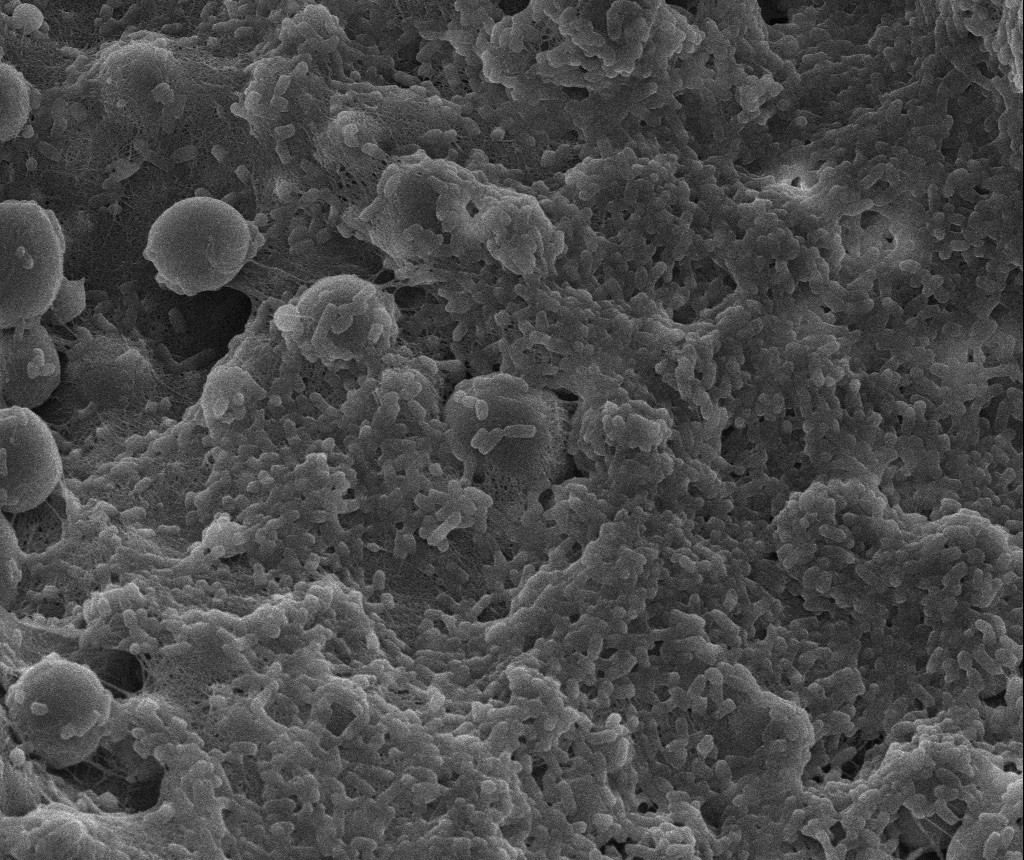
We combine materials synthesis, microbiological assays and mechanistic studies, including spectroscopy and imaging, to understand how size, surface chemistry, redox activity and mobility influence microbial viability and biofilm formation. By systematically varying these parameters, we aim to decouple antimicrobial efficacy from cytotoxicity and environmental impact.
The work answers urgent needs in antimicrobial resistance, healthcare-associated infections and antifouling technologies, with relevance to medical devices, water systems and protective coatings.
- Heritage Protecting paintings, stone and silk from biodeterioration, with treatments designed to be compatible and reversible.
- Environment Coatings against microbiologically influenced corrosion, and materials for cleaner water.
- Health Antimicrobial materials that answer antimicrobial resistance and healthcare-associated infections.
- Scott G. Mitchell Scientific Researcher, CSIC
- Rafael Martín Rapún Associate Professor, University of Zaragoza
- Nicolás Gracia Vallés Postdoctoral Researcher, CSIC
- Anabela Carnicero Postdoctoral Researcher, CSIC
- Griselda Pérez Ireta PhD student, CONAHCYT fellow
- Mariella Malefioudaki PhD student, Organic Chemistry programme
- Paula Novella Rodríguez PhD student, Organic Chemistry programme