Materials designed molecule by molecule, tested where they have to work.
We develop redox-active and responsive materials — polyoxometalates, nanoparticles, polymers and hybrids of them — for health, the environment and cultural heritage. What we learn on real surfaces feeds back into how we design the next material.
Three places where it matters
Start here if you want to know what the work is for.
-
 Heritage
Protecting paintings, stone and silk from biodeterioration, with treatments designed to be compatible and reversible.
-
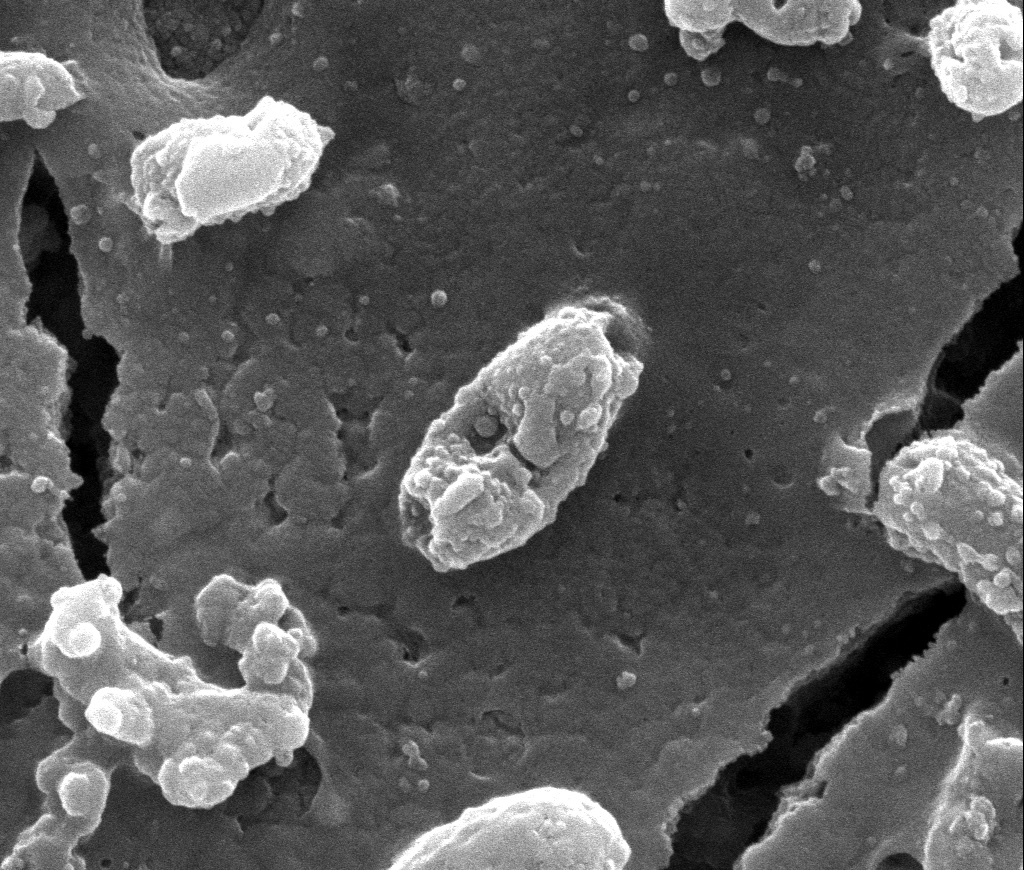 Environment
Coatings against microbiologically influenced corrosion, and materials for cleaner water.
-
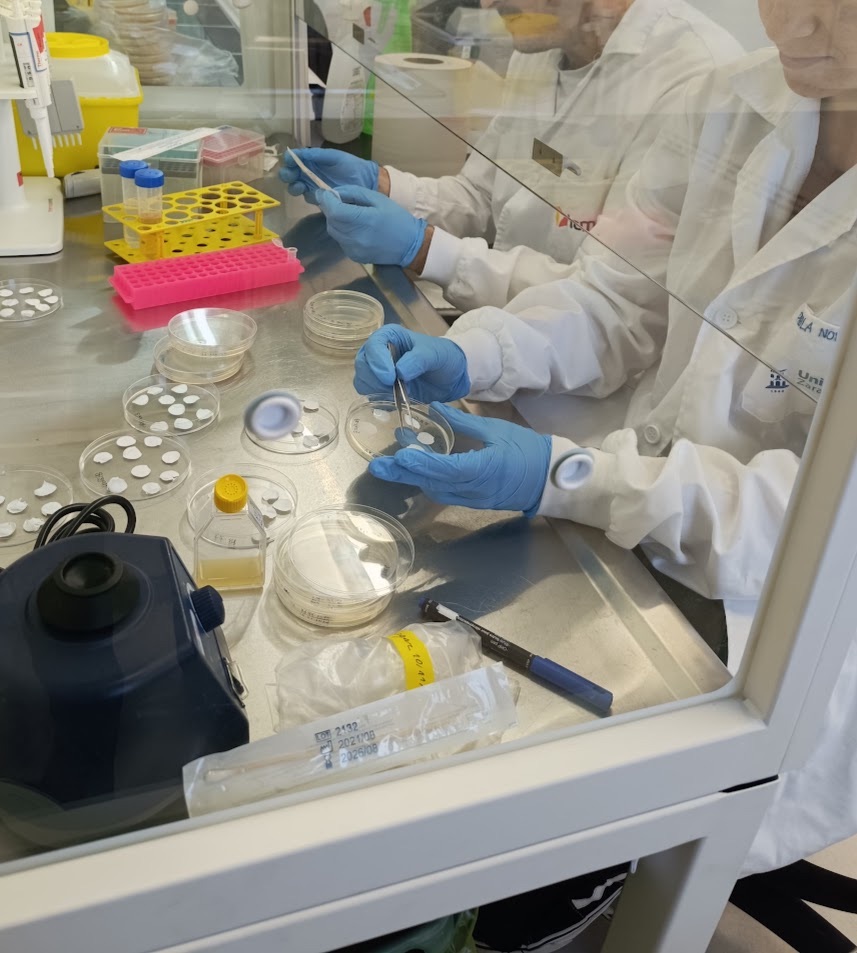 Health
Antimicrobial materials that answer antimicrobial resistance and healthcare-associated infections.
Three lines underneath
Start here if you want to know how it works — or if you are thinking of doing a PhD or postdoc with us.
- Line 01 · Chemistry Redox-Active Polyoxometalate-Based Functional Materials How redox state, composition and local environment govern what a polyoxometalate can do — and the design rules that follow.
- Line 02 · Microbiology Nano- and Hybrid Materials for Antimicrobial and Biofilm Control What happens at the nano–bio interface, so antimicrobial efficacy can be decoupled from cytotoxicity and environmental impact.
- Line 03 · Microbiology Materials–Surface and Materials–Biology Interactions in Complex Environments How materials behave on real surfaces and living systems over time, outside idealised laboratory conditions.