Microbes damage what we value. We design the materials that stop them.
Chemists, microbiologists and heritage conservators at INMA (CSIC – University of Zaragoza), working on one problem from three sides.
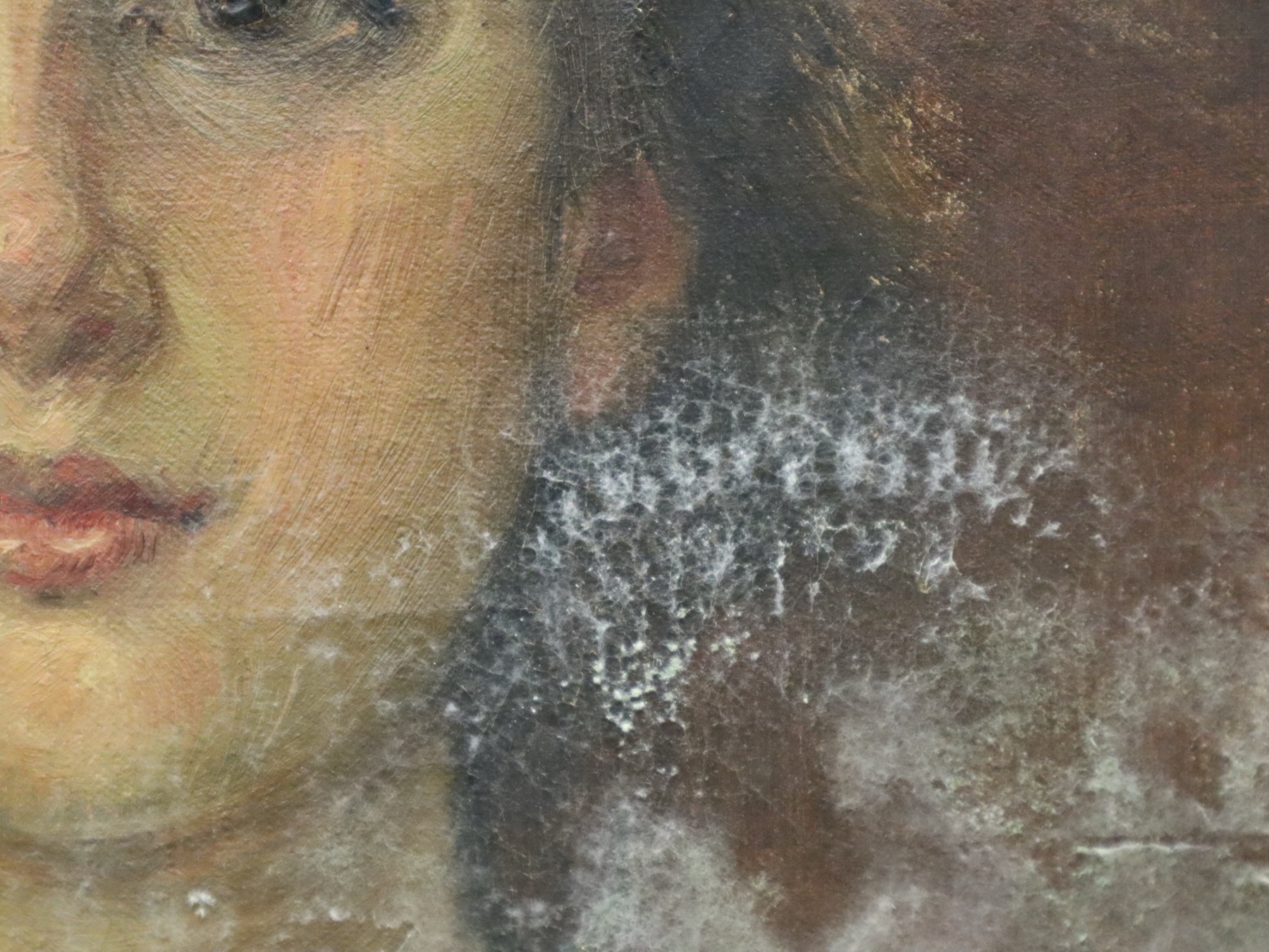 Heritage
After a flood, mould spreads across a portrait.
Antimicrobial treatments designed to be compatible with the original, and reversible.
Heritage research
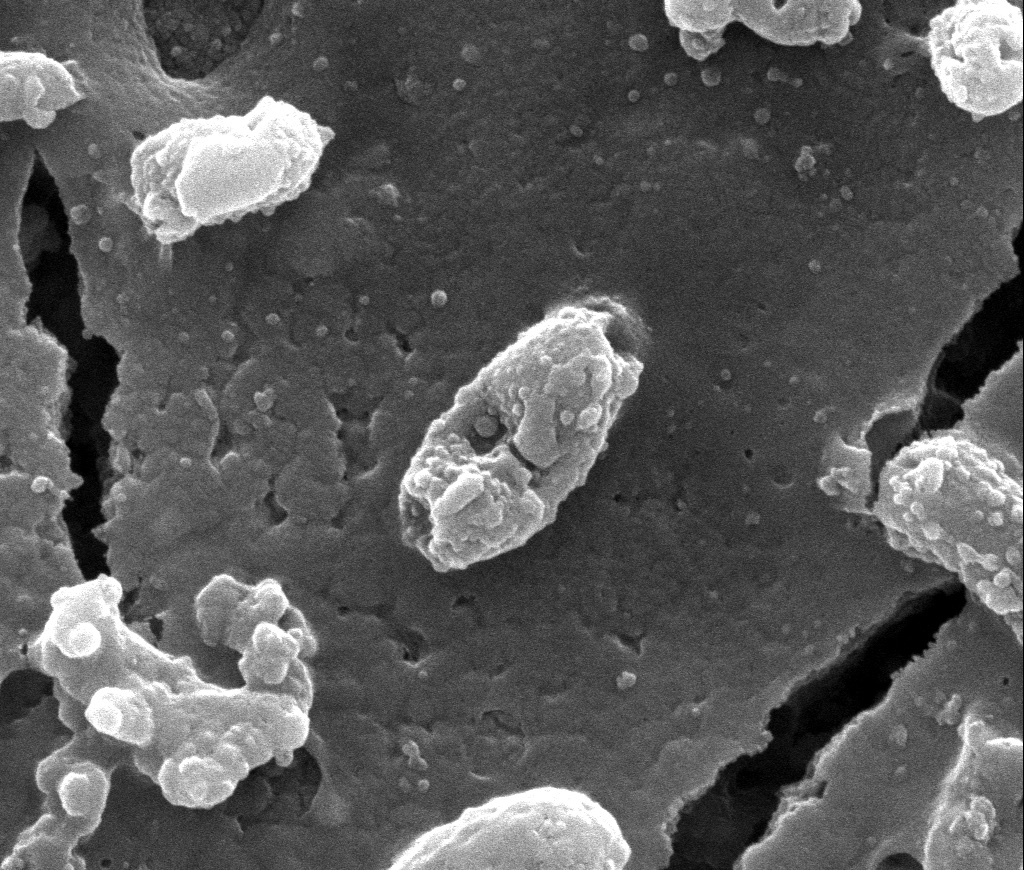 Environment
In seawater, bacteria eat into steel.
Ionic-liquid coatings that are antimicrobial and anticorrosive at the same time.
Environment research
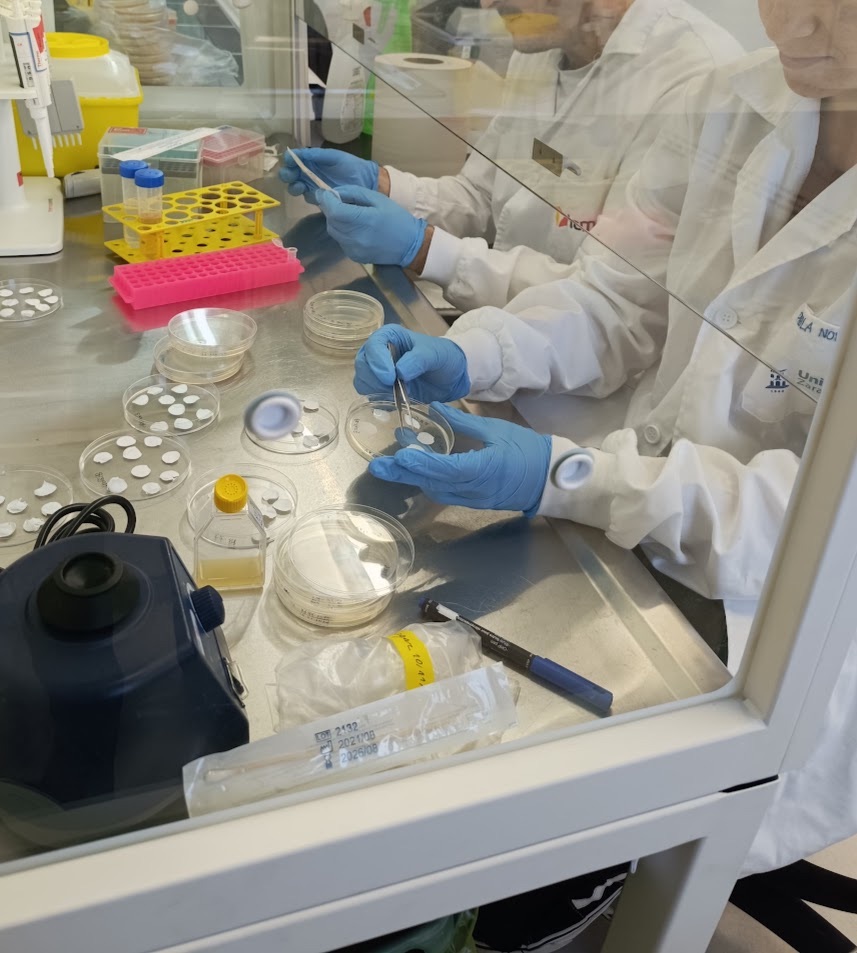 Health
Bacteria learn to resist our antibiotics.
Hybrid materials that act through other mechanisms — membranes, oxidative stress.
Health research
Zoom in to understand
We look at a problem from the scale where people see it down to the scale where we can act on it.
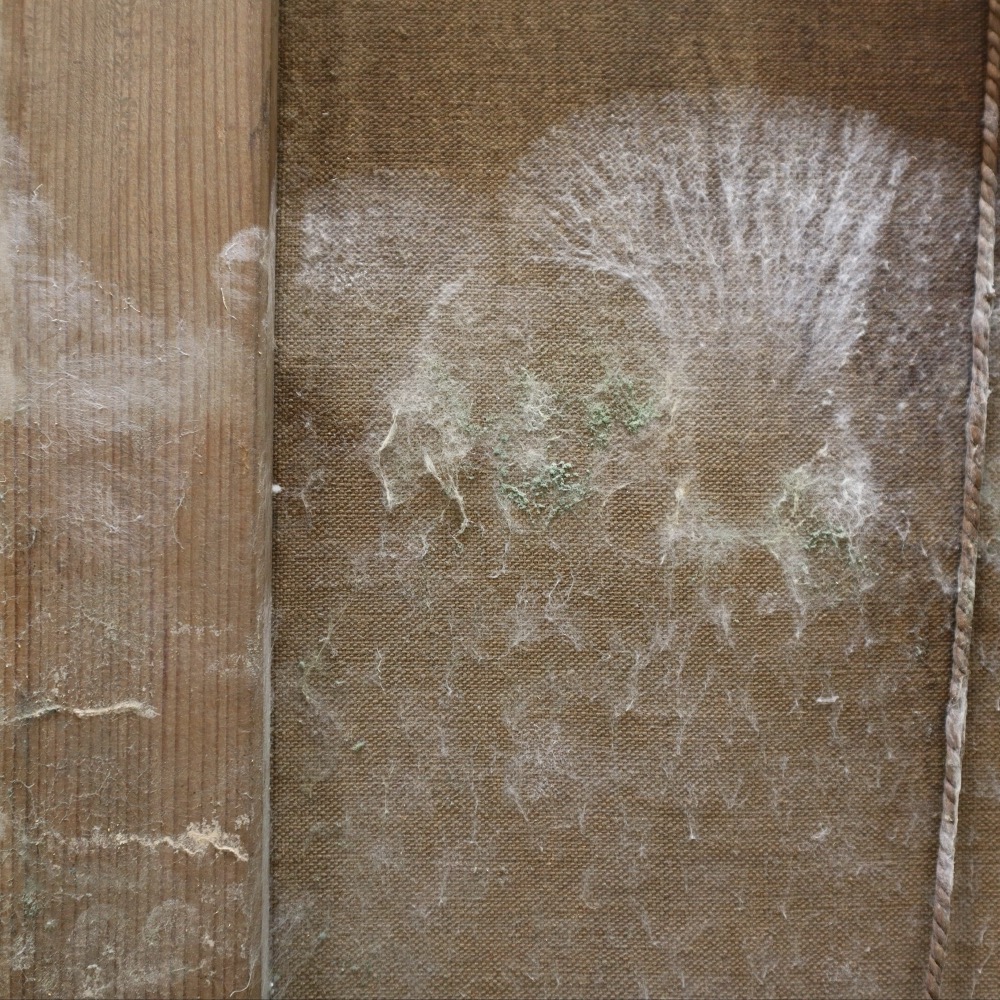
Mould on the back of a canvas damaged by the 2024 Valencia floods. Photo by Griselda Pérez Ireta.
-
× 1
What we protect
It starts with something people care about: a painting, a stone façade, a steel structure in the sea, a hospital surface. Here, mould spreading on the back of a canvas after the 2024 Valencia floods.
-
× 10 000
What threatens it
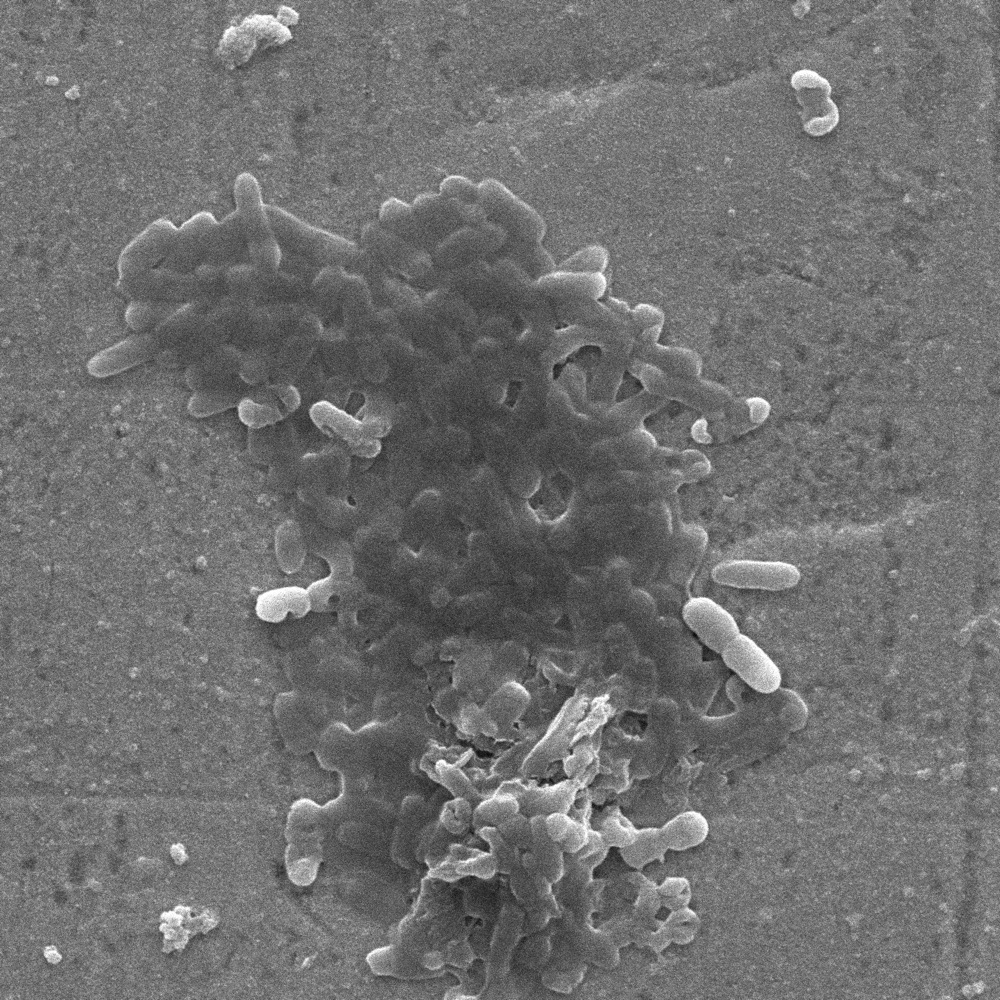
Up close, the damage has authors: microbes, and the biofilms they build to hold on. Understanding how they live tells us where to act.
-
× 10⁸
What we build
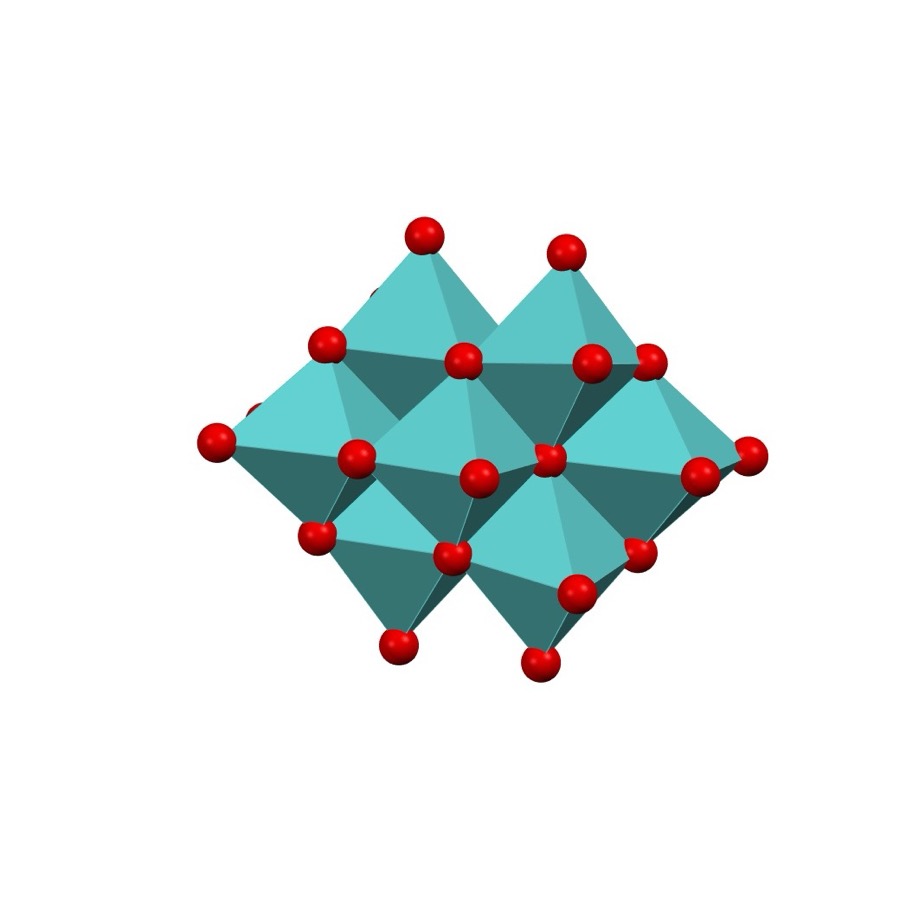
At the scale of a nanometre we design the answer: polyoxometalates and hybrid materials that stop them, and stay compatible with what they protect.
Build up to solve
Each layer of our work makes the one above it possible. Start from an application, or from the science underneath it.
-
Layer 3
Applications
And we take them out of the lab, to three places where they matter.
- Heritage Protecting paintings, stone and silk from biodeterioration, with treatments designed to be compatible and reversible.
- Environment Coatings against microbiologically influenced corrosion, and materials for cleaner water.
- Health Antimicrobial materials that answer antimicrobial resistance and healthcare-associated infections.
-
Layer 2
Microbiology
Then we watch what they do to microbes — how they stop a biofilm, and why.
- Line 02 Nano- and Hybrid Materials for Antimicrobial and Biofilm Control What happens at the nano–bio interface, so antimicrobial efficacy can be decoupled from cytotoxicity and environmental impact.
- Line 03 Materials–Surface and Materials–Biology Interactions in Complex Environments How materials behave on real surfaces and living systems over time, outside idealised laboratory conditions.
-
Layer 1
Chemistry
It starts with a molecule. We build polyoxometalates — clusters of metal–oxygen polyhedra — and hybrid materials around them.
Selected publications
From the group
-
event
Águeda joins the first Heritage Science Summer School in Beijing
With a travel grant, and taking part in the Spain–China dialogue on science, technology and heritage organised by CDTI and the Chinese Academy of Sciences.
-
paper
Two cover features, in ChemPlusChem and Materials Horizons
Lampenflora control in the Pommery champagne cellar, and polyoxomolybdate ionic-liquid coatings against microbiologically influenced corrosion.
-
award
Isabel Franco Castillo receives a CSIC doctoral thesis prize
One of four awarded by CSIC, for her thesis on preventing biodeterioration of cultural heritage with nanostructured materials.
-
paper
3D-printable polymerisable ionic liquids, on the cover of Device
High-resolution antimicrobial prints, with our long-time collaborator Víctor Sans at Universitat Jaume I.